
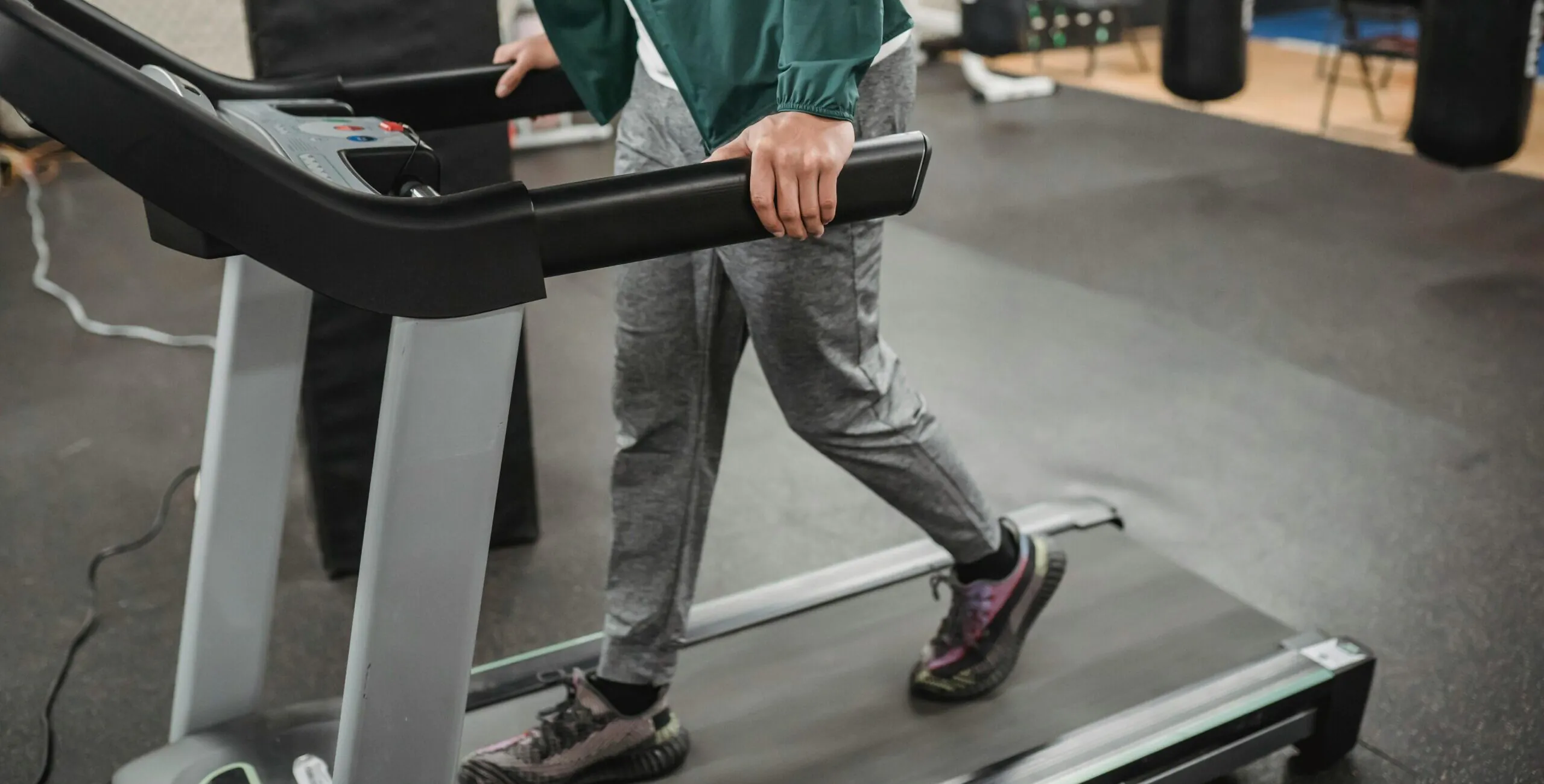
Gait Analysis
Physical Therapist’s Role in Gait Analysis
Physical therapy plays a key role in both walking and running gait analysis by evaluating how a person moves to identify abnormalities or inefficiencies1. Gait analysis can assist in the diagnostic process and serves as a valuable starting point for more detailed assessment.
During a walking gait assessment, therapists assess factors like stride length, joint angles, muscle coordination, trunk and arm position, and balance using observation or tools like video assessment.
Running gait requires a more detailed approach due to the higher forces and speed involved 2. In addition to components assessed with walking, therapists can also examine cadence, foot strike pattern, and how the body absorbs impact through the hips, knees, and ankles 3.
Based on these assessments, physical therapists can develop individualized treatment plans that include strengthening, mobility work, and movement retraining 4. For runners, interventions may also involve cadence modification and adjustments to running mechanics of the upper and lower extremities to reduce injury risk and improve efficiency 5.
The overall goal is to enhance movement efficiency, reduce pain, and optimize performance in both daily walking and higher-level activities involving running 6, 7.
References:
- Baker, R. (2006). Gait analysis methods in rehabilitation. Journal of NeuroEngineering and Rehabilitation, 3(1), 4. https://doi.org/10.1186/1743-0003-3-4
- Novacheck, T. F. (1998). The biomechanics of running. Gait & Posture, 7(1), 77–95.
- Lieberman, D. E., Venkadesan, M., Werbel, W. A., Daoud, A. I., D’Andrea, S., Davis, I. S., Mang’Eni, R. O., & Pitsiladis, Y. (2010). Foot strike patterns and collision forces in habitually barefoot versus shod runners. Nature, 463(7280), 531–535. https://doi.org/10.1038/nature08723
- Alvarez, M. (2025). Advancing human mobility and recovery through modern physical therapy practice. Journal of Pain Management and Medicine, 11(6), 361. https://doi.org/10.35248/2684-1320.25.11.361
- Heiderscheit, B. C., Chumanov, E. S., Michalski, M. P., Wille, C. M., & Ryan, M. B. (2011). Effects of step rate manipulation on joint mechanics during running. Medicine & Science in Sports & Exercise, 43(2), 296–302. https://doi.org/10.1249/MSS.0b013e3181ebedf4
- Hinrichs, R. N. (1987). Upper extremity function in running. Human Movement Science, 6(2), 147–163.
- Saunders, S. W., Schache, A., Rath, D., & Hodges, P. W. (2004). Changes in three-dimensional lumbo-pelvic kinematics and trunk muscle activity with running speed. Journal of Orthopaedic & Sports Physical Therapy, 34(7), 356–366.